An idea for the domain
Hands-on agent workshops
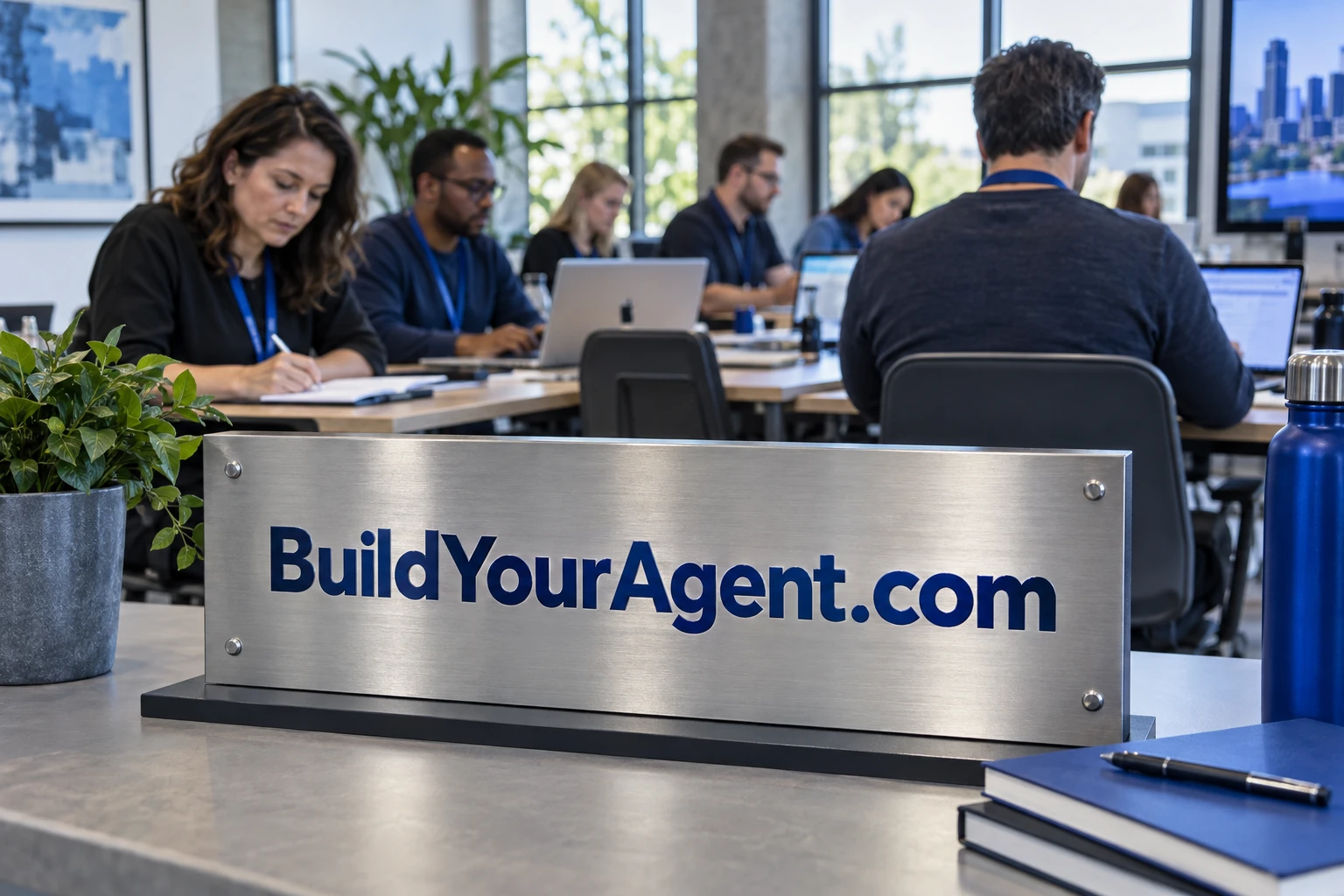
An agent workshop is most convincing when a participant can explain what they built and where it should stop. BuildYourAgent.com could give a practical training business a direct invitation: arrive with a task and learn how to turn it into a small, testable agent. The concept below is illustrative. It describes a possible business a domain buyer could develop, rather than a course currently being offered.
The initial audience could be operations managers who have tried AI chat tools but have never connected a model to a workflow. They need a shared vocabulary and a safe place to practice. They also need enough understanding to talk with their technical colleagues after the session. A room full of beginners should not have to master deployment infrastructure before they can learn what a tool call does.
Promise a learning result
A first workshop could focus on preparing an internal meeting brief from a small fictional document set. Participants would define the question, choose the source material, create the workflow, test a misleading input, and decide when a person needs to review the result. The deliverable would include the working exercise and a one-page explanation of its boundaries. Completion would mean demonstrating those skills, not merely attending the call.
Keep prerequisites visible before registration. Participants should know whether they need an account, a paid platform plan, administrator permission, or basic spreadsheet familiarity. Give them a setup check that can be completed ahead of time. A facilitator should have a backup exercise ready for anyone whose company restricts external tools. Otherwise the first half of the workshop can disappear into account access while the learning objective waits.
Design the exercise before the slide deck
The exercise should contain a small collection of clean source documents and several intentionally awkward requests. One document might be outdated. Another might contain a deadline that conflicts with the latest agenda. Participants can practice recognizing these problems before adding a model. The point is to learn how information quality affects a workflow, not to turn every difficulty into a prompting puzzle.
The n8n introductory agent tutorial offers a platform example for a guided build. A training provider could use official documentation as a companion while writing original exercises and teaching notes. Keep the workshop tied to a tested platform version. Rehearse the session after meaningful platform changes, and tell participants which parts of their exercise may need updating when they return later.
A session with room to think
An illustrative half-day session could begin with a manual run of the task. Participants read the documents and write the brief themselves. Next they build the simplest automated version, compare it with their manual result, and inspect a case where the source material is incomplete. The final segment asks each person to adapt the workflow for a new request and explain the review boundary to a partner.
This structure gives the facilitator several ways to observe learning. Can the participant identify an unsupported statement? Can they point to the source for a date? Can they describe which step sends information outside the workspace? A final demonstration should reveal those abilities. A certificate can record participation, but it should not imply professional competence beyond the skills actually assessed during the exercise.
Make follow-through part of the offer
The week after training is where a promising exercise can lose its momentum. Participants return to urgent work, different tools, and data they cannot freely upload. A short follow-up clinic could help them translate the exercise into a proposal for their own team. That clinic should review the proposed task and its boundaries. It should not quietly become an unlimited implementation service bundled into the ticket price.
Give each participant a reusable planning worksheet. It can ask for the task owner, authorized data sources, desired output, prohibited actions, review step, and a handful of representative tests. Anthropic's tool-design guidance is a useful technical companion on describing tools clearly. In a beginner workshop, translate that concern into a practical question: could someone unfamiliar with this action tell when it should be used?
Reach a defined group
A credible distribution path would be partnerships with local business associations, professional communities, or internal learning teams. Offer one narrow pilot session with a clear audience and prerequisites. Ask the partner to recruit people who perform similar work so examples remain relevant. A mixed room of developers, executives, and complete beginners can make a single session difficult to pace well.
After the pilot, collect feedback on specific moments. Which setup step blocked progress? Which concept was still unclear during the final exercise? What did participants attempt the following week? Permission-based examples of completed work can become future teaching material, provided they are anonymized and actually suitable for sharing. Avoid presenting attendance, enthusiasm, or a positive survey as evidence of business savings that nobody measured.
Price the work honestly
The operating costs include preparation, platform rehearsals, facilitation, account troubleshooting, and follow-up. Group size should reflect the amount of individual help the exercise requires. A second facilitator might be more valuable than another module if participants need frequent assistance. Private company sessions could use an adapted fictional scenario, with any work involving internal data scoped separately and approved by the customer.
BuildYourAgent.com suits a business where the customer is invited to participate rather than watch. A buyer could test this direction with one carefully rehearsed workshop and a clear assessment of what people learned. If that is the business you want to create, inquire about the domain and describe the audience, teaching format, and intended first course.